

Winter and the months right after the monsoon are when most Indian households start stocking up on something for immunity — a jar of chyawanprash, a box of Giloy tablets, or lately, a ready-made “immunity kit” that bundles a few products together. The kit format has become popular because it saves you from piecing together five different supplements from five different brands.
But “immunity booster kit” means different things depending on who’s selling it. Some are Ayurvedic combos built around Giloy, Tulsi, and Ashwagandha. Others lean on Vitamin C and zinc tablets. A newer category uses Himalayan-origin ingredients like raw honey, shilajit, and herbal teas instead of tablets and syrups. Knowing the difference matters more than picking whichever kit shows up first on a search page.
This guide compares the immunity kit brands you’re most likely to come across while shopping online in India, explains what each one is actually built around, and points out what to check before you buy.
What “Immunity Booster” Actually Means
No food, herb, or supplement can prevent illness or guarantee you won’t fall sick — that’s not how the immune system works, and it’s worth being upfront about that before comparing products. What these kits can reasonably offer is nutritional and herbal support: ingredients traditionally used, or compounds like Vitamin C, zinc, and antioxidants, that support general wellness as part of a balanced diet.
The Ministry of AYUSH and most Ayurvedic pharmacopeias describe herbs like Giloy, Tulsi, and Ashwagandha in terms of traditional use for supporting the body’s natural defenses, rather than as treatments for specific diseases. Keep that framing in mind while reading brand claims — including the ones later in this article.
What to Check Before Buying an Immunity Kit
- What’s actually inside — a kit of five random items is not automatically better than a kit of two well-chosen ones. Read the full ingredient list, not just the product name.
- Format that fits your routine — capsules and tablets are easy to standardize; honey, teas, and juices are easier to work into daily meals but harder to dose precisely.
- Certifications — look for FSSAI licensing on any food or nutraceutical product, and GMP or AYUSH approval on classical Ayurvedic formulations.
- Source and processing claims — “organic,” “wild-harvested,” or “Himalayan” should ideally be backed by some traceability information on the brand's website, not just packaging copy.
- Realistic claims — be cautious of any kit promising to “cure,” “prevent,” or guarantee results against specific illnesses. Genuine wellness brands usually talk about support, not cures.
Comparing the Popular Immunity Kit Brands in India
Brand Kit Style Core Ingredients Typical Price Range
Dabur Immunity Kit Ayurvedic, multi-product combo Chyawanprash, Giloy, Tulsi drops, honey Starting around ₹490
Patanjali Immunity Boosters: Ayurvedic tablets and churna; Ashwagandha, Giloy, Amla, Brahmi; varies by product
Kapiva Immune Care Juice-based Amla, Giloy, Tulsi, Ashwagandha and other herbs Starting around ₹450
Jiva Ayurveda Immunity Kit: Ayurvedic combo, two variants Chyawanprash or Ayush Kwath, Giloy capsules, herbal tea, nasal drops Mid-range
Nirvana Organic Immunity Booster Kit Himalayan-origin combo Himalayan Forest Honey, Buransh Squash, Rhododendron Herbal Tea, Pure Shilajit ₹1,799 (MRP ₹2,049)
Dabur is the most recognizable name here, and its kit reflects that mass-market approach — a bundle of familiar staples like chyawanprash and Giloy-Tulsi drops at an accessible price point. It’s a reasonable starting point if you want something conventional and widely available.
Patanjali takes a similar Ayurvedic-staples approach, usually sold as individual tablets, churna, or capsules rather than a single boxed kit, so you build your own combination.
Kapiva’s immunity products lean juice-first, which suits people who prefer drinking their herbs over swallowing tablets, though juices are harder to dose consistently and often contain added sugar or preservatives — worth checking the label.
Jiva Ayurveda offers a more classical, doctor-formulated kit with a choice between a Chyawanprash-based or Ayush Kwath-based combo, plus nasal drops and herbal tea, aimed at people who want a fuller daily Ayurvedic routine rather than a single product.
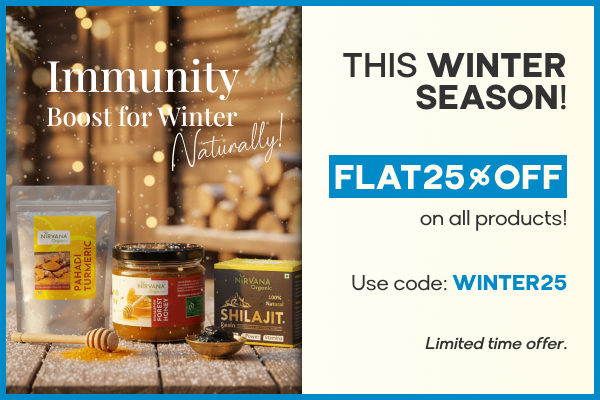
Nirvana Organic takes a different route from the Ayurvedic-staples format above. Its Immunity Booster Kit is built around Himalayan-origin ingredients — raw forest honey, Buransh (rhododendron) squash, rhododendron herbal tea, and pure shilajit — positioned as a Himalayan wellness ritual rather than a tablet-and-syrup combo. It’s priced higher than most of the kits above, which reflects the raw, less-processed ingredients and smaller-batch Himalayan sourcing rather than a like-for-like comparison with mass-market Ayurvedic kits.

A Closer Look: Nirvana Organic Immunity Booster Kit
If you’d rather get your immunity support from whole, minimally processed Himalayan ingredients than from tablets, this kit is worth a closer look. Here’s what’s actually in the Nirvana Organic Immunity Booster Kit:
- Himalayan Forest Honey — raw honey sourced from Himalayan forest regions, used the way honey is traditionally used in Indian households, stirred into warm water or taken on its own.
- Buransh Squash — a concentrate made from Buransh (rhododendron) flowers, a fruit traditionally used in hill-state households as a seasonal drink.
- Rhododendron Herbal Tea — a caffeine-free infusion made from the same flower, meant as a daily herbal tea rather than a medicinal dose.
- Pure Shilajit — a mineral-rich resin sourced from the Himalayas, traditionally used in small daily amounts.
None of these ingredients are clinically proven to prevent illness, and the brand's own product description frames them as ingredients “traditionally valued for their health-supporting properties” rather than as medicine — which is the right way to read any wellness kit, from any brand.
The kit is priced at ₹1,799 (MRP ₹2,049), ships free on orders above ₹1,499, and is available with cash on delivery. It’s a reasonable pick if you’re specifically looking for Himalayan-sourced, less-processed ingredients over tablet-based Ayurvedic combos, or if you want something gift-worthy — the packaging and format lend themselves to that.
Tablets, Juice, or Whole-Ingredient Kit — Which Format Suits You?
- Choose tablet or capsule kits (Patanjali, parts of Jiva’s kit) if you want precise, repeatable dosing and don’t mind the taste of Ayurvedic tablets.
- Choose juice-based kits (Kapiva) if you prefer drinking your daily herbs and don’t mind checking sugar content.
- Choose classical multi-product kits (Dabur, Jiva) if you want an all-in-one routine that includes chyawanprash, drops, and tea together.
- Choose whole-ingredient, Himalayan-origin kits (Nirvana Organic) if you’d rather work honey, herbal tea, and shilajit into daily meals than take tablets, and you’re comfortable with a higher price point for smaller-batch sourcing.
There’s no single “best” format — it depends on whether you want convenience, taste, dosing precision, or ingredient origin to drive the decision.
Common Mistakes When Buying Immunity Kits
- Judging a kit only by the number of products inside. More items aren’t automatically better if the ingredients overlap or aren’t things you’ll actually use.
- Ignoring existing medication or conditions. Herbs like Ashwagandha and shilajit can interact with certain medications or aren’t suitable during pregnancy — check with a doctor first.
- Expecting fast results. Herbal and nutritional support works cumulatively, not overnight.
- Skipping the ingredient list on the product page. Marketing copy on the box often says less than the actual ingredient panel.
- Not checking shipping, returns, and COD terms before buying from a smaller or newer brand.
FAQ Section
1. What is an immunity booster kit? It’s a bundle of two or more wellness products — often herbs, honey, teas, or supplements — sold together and marketed to support general immune health as part of a daily routine.
2. Can an immunity booster kit actually prevent illness? No product can guarantee that. These kits offer nutritional or traditional herbal support, not medical prevention or treatment.
3. Which is better — Ayurvedic tablets or a Himalayan whole-ingredient kit? Neither is objectively better; it depends on your preference for dosing precision (tablets) versus working natural ingredients like honey and herbal tea into meals (whole-ingredient kits).
4. Is the Nirvana Organic Immunity Booster Kit vegetarian? Honey is an animal-derived product, so this kit is not suitable for a strict vegan diet, though it fits a vegetarian diet that includes honey. Check the product page for current details before ordering.
5. How long does it take for an immunity kit to “work”? There’s no fixed timeline. Nutritional and herbal habits are typically built up over weeks of consistent use, not days.
6. Are these kits safe during pregnancy or on medication? Not automatically. Ingredients like shilajit and Ashwagandha are generally advised against or need medical supervision during pregnancy or alongside certain medications — check with a doctor first.
7. What should I check before buying an immunity kit online in India? The full ingredient list, FSSAI/AYUSH certification where applicable, shipping and return policy, and whether the claims made are reasonable rather than promising a cure or guaranteed prevention.